
A REVOLUTIONARY TIMELINE
The Revolution
Unfolds
in Princeton
Between 1776 and 1783, Princeton became the setting for military victories, political transformation, and the founding of a new nation.
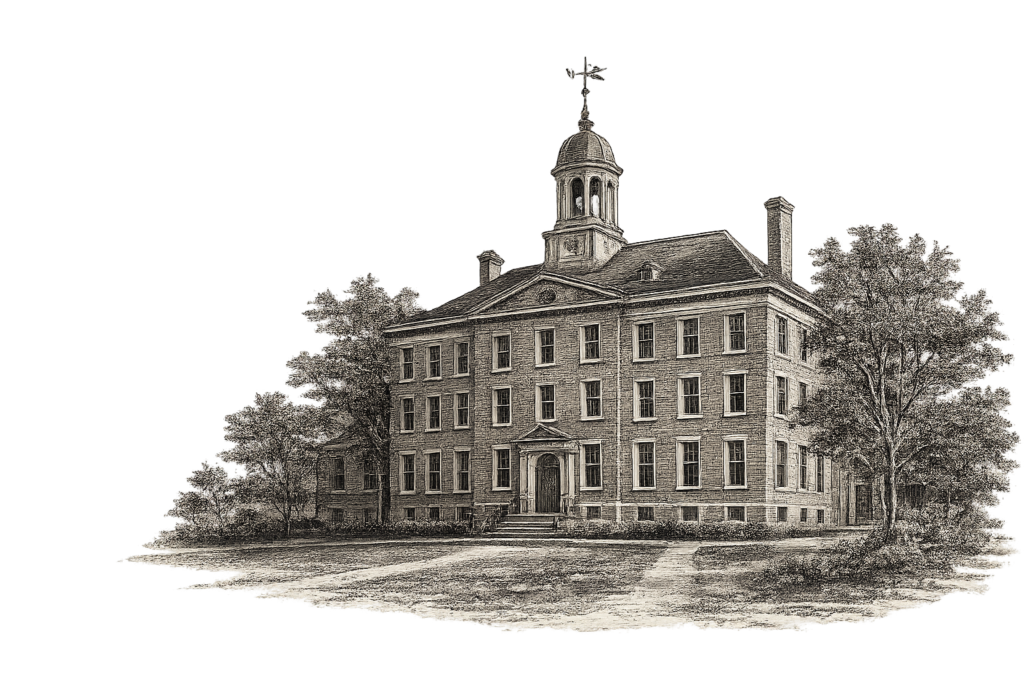
NassAU HALL
Site of the Continental Congress June – November 1783
THE REVOLUTIONARY YEARS
Princeton Through
the Revolution
From the retreat across New Jersey to the meeting of the Continental Congress, Princeton played a central role in some of the most pivotal moments of the American Revolution.

REVOLUTIONARY CAMPAIGN
1776
Retreat Across
New Jersey
As British forces advanced across New Jersey in late 1776, General George Washington and the Continental Army retreated southward through Princeton. The town became part of a larger campaign that would soon reshape the course of the war.
INDEPENDENCE AND REVOLUTION
Princeton and Independence
Princeton emerged as one of the most politically influential towns in Revolutionary America. Through figures like John Witherspoon, Richard Stockton, and Joseph Hewes, the town became directly tied to the movement for independence.
1776

THE TURNING POINT
1777
The Battle
of Princeton
On January 3, 1777, George Washington led Continental forces to victory against British troops in Princeton. The battle renewed Patriot morale and transformed the town into a lasting symbol of Revolutionary resilience.
THE BATTLE REACHES PRINCETON
1777
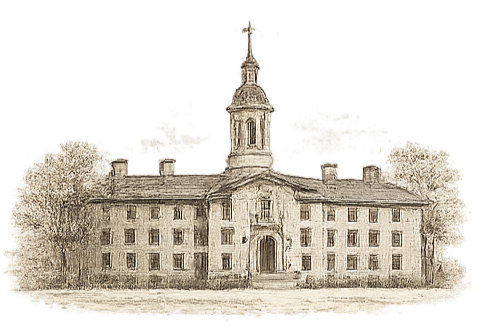
Nassau Hall
Under Fire
As British soldiers retreated into Nassau Hall during the battle, Alexander Hamilton’s artillery opened fire upon the building. The cannon damage became one of the Revolution’s most enduring physical reminders in Princeton.
A TOWN AT WAR
1777
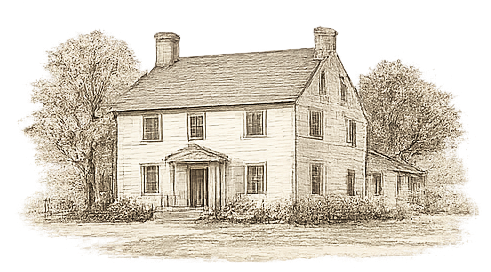
The Clarke House
Field Hospital
Following the Battle of Princeton, wounded soldiers from both armies were carried into the Clarke House for treatment. General Hugh Mercer was treated there after suffering fatal injuries during the fighting.
1777–1782
A REVOLUTIONARY CROSSROADS
Princeton and the Patriot Cause
In the years following the battle, Princeton’s homes, taverns, churches, and farms became gathering places for military leaders, delegates, and political thinkers moving throughout the colonies.

THE NATION TAKES SHAPE
1783
Congress
Arrives in Princeton
After unrest forced Congress to leave Philadelphia, the Continental Congress relocated to Nassau Hall in Princeton. For several months, the town briefly became the capital of the United States.
THE CAPITAL OF A NEW NATION
Princeton Becomes the Nation’s Capital
While Congress met in Nassau Hall, many of the Revolution’s leading figures gathered throughout Princeton. Washington, Madison, Hamilton, Jefferson, and Elias Boudinot all helped shape the future of the United States from within the town.
1783
THE ARCHITECTS OF LIBERTY
1783
A New Nation
Emerges
From Nassau Hall to Prospect Farm and Morven, Princeton became a center of diplomacy, governance, and political debate during the closing months of the Revolution. The small New Jersey town stood briefly at the center of the American experiment.

Where Revolution
Became Government
The Revolution passed through many cities, but in Princeton, victory, governance, and independence converged. The town’s streets, halls, and homes became part of the story of a nation taking shape.
