HISTORICAL ATLAS
Places That Shaped a Revolution
Explore the homes, halls, roads, battlefields, and civic spaces where Princeton’s Revolutionary story unfolded between 1776 and 1783.
THE REVOLUTIONARY LANDSCAPE
A Town at the Crossroads of War and Nationhood
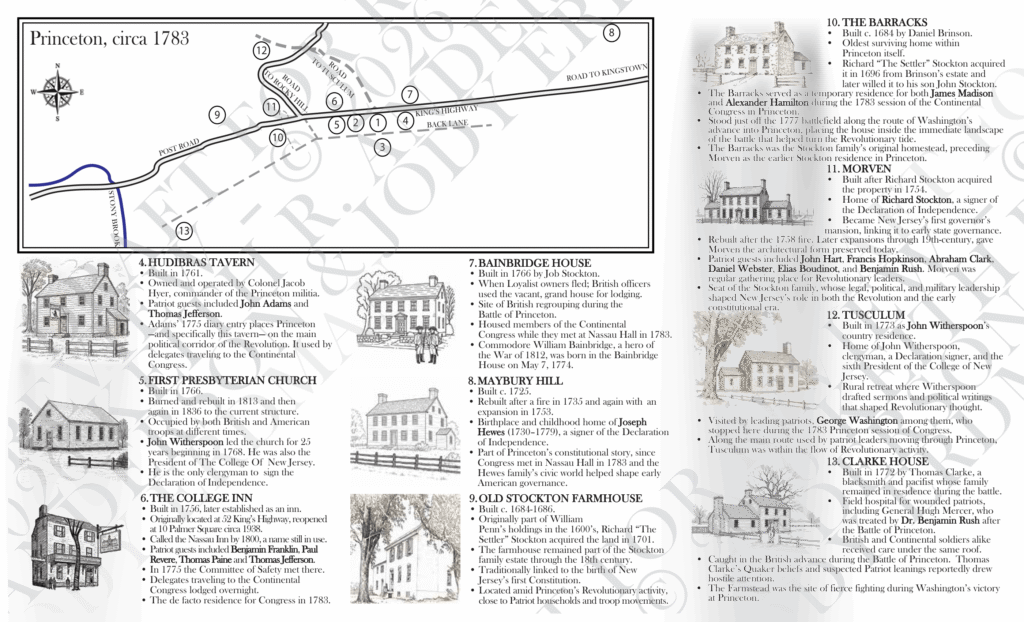
Princeton’s revolutionary landscape was shaped by movement: armies crossing New Jersey, delegates traveling to Congress, residents sheltering in place, and leaders gathering in homes, churches, taverns, and college buildings. These places formed the physical setting for military conflict, political debate, and the early work of American governance.
EXPLORE PLACES
Historic Sites of Revolutionary Princeton
CIVIc landmark
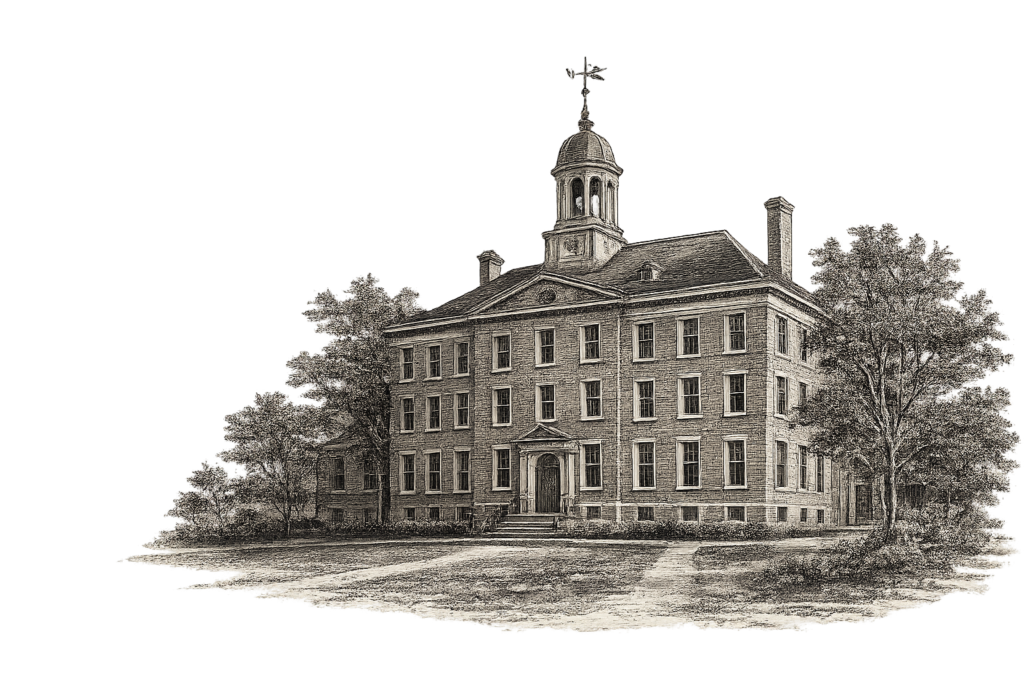
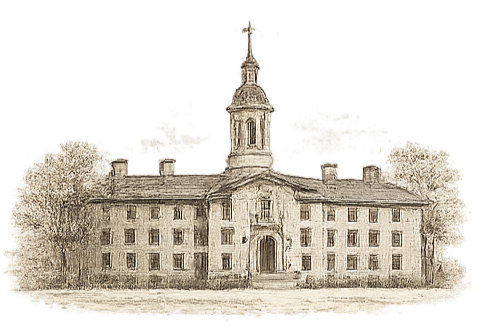
Nassau Hall
In 1783, Nassau Hall became the meeting place of the Continental Congress, briefly making Princeton the capital of the United States.
Explore Nassau Hall →
HISTORIC RESIDENCE
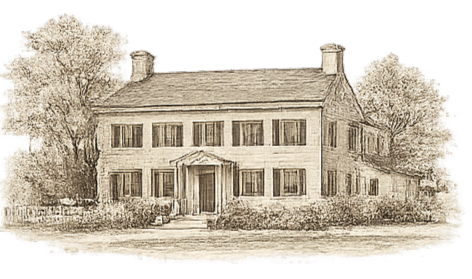
Morven
Originally built in the eighteenth century, Morven stood at the center of Princeton’s political and social life during the revolutionary era.
Explore Morven →
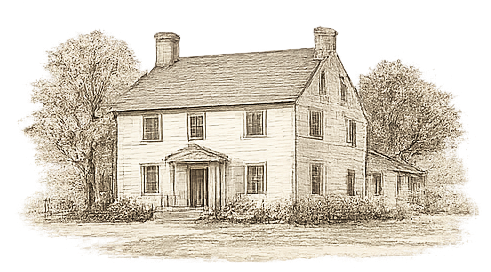
CIVIc landmark
Princeton Battlefield
The Battle of Princeton marked a pivotal victory for George Washington and helped shift momentum in the Revolutionary War.
Explore the Battlefield →
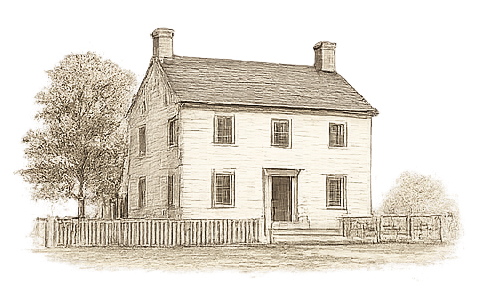
HISTORIC HOME
Bainbridge House
One of Princeton’s oldest surviving homes, Bainbridge House reflects the domestic life of the revolutionary period.
Explore Bainbridge House →
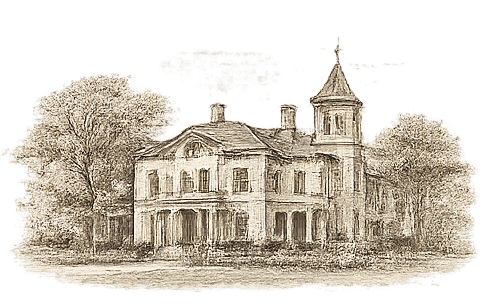
COLONIAL ESTATE
Prospect House
Overlooking Princeton’s historic landscape, Prospect House became connected to both academic and civic life in the revolutionary era.
Explore Prospect House →
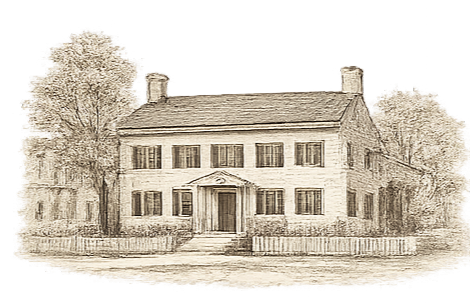
PRESIDENTIAL RESIDENCE
The President’s House
Built for the presidents of the College of New Jersey, the residence became part of Princeton’s intellectual and political world.
Explore the President’s House →
The Geography of Revolutionary Princeton
Roads, rivers, farms, taverns, and college buildings connected Princeton to the wider revolutionary landscape. The town’s geography shaped how soldiers moved, how Congress gathered, and how leaders understood Princeton’s role in the new republic.